Sunday, March 8, 2015

UDL Lesson Plan 
Title:   Mystery!
Author: Crissie Linville           
Subject:  Looking for Clues
Grade Level: Kindergarten
IEP classification(s): 
Common Core Standard(s):  CCSS.ELA-Literacy.RL.K.1, CCSS.ELA-Literacy.RL.K.2CCSS.ELA-Literacy.SL.K.1, CCSS.ELA-Literacy.SL.K.1.a, CCSS.ELA-Literacy.SL.K.6,, CCSS.ELA-Literacy.W.K.2, CCSS.ELA-Literacy.LK.1.D
Lesson Goals:  Learning how to find clues to answer questions.
Lesson Materials:  Youtube video of Who Took the Cookies from the Cookie Jar, Story book of Who Took the Cookies from the Cookie Jar, pencils, “detective” notebook.

Instructional Lesson Methods and Assessment
Anticipatory Set
·         The lesson will start by reviewing what a clue is. Teacher will guide discussion on how detectives use clues to figure things out.
·         The teacher will explain to the students the definition of detective. The teacher will guide discussion on what a detective does and ask questions to encourage student participation.
·         The teacher will explain to the students that they will be watching a video titled, “Who Took the Cookies from the Cookie Jar”, in which someone has taken the cookies from the cookie jar and we must figure out who it was.
·         The teacher will explain to the students that they need to pay attention to the video because they will play a game based on the video.
·         The teacher will remind students of the sitting and listening rules while watching a video.
·         The teacher will play the YouTube video via the Smart Board.
·         Students with disabilities may be given a copy of the book to help them during the playing of the video.

Recognition “What”
Multiple means of Representation
Strategic “How”
Multiple means of Action and Expression
Affective “Why”
Multiple means of Engagement
 1.1 Customize the display of information:  the teacher will ensure that the video is adjusted to the proper size for all students to be able to hear it clearly and will adjust the volume so all students will be able to hear it clearly.
1.2 Provide alternatives for auditory: Students with auditory issues will be given a book to read along with the video.
1.3 Each student will receive a copy of the book, “Who Took the Cookies From the Cookie Jar”


 6.2 Support planning and strategy development while discussing clues. I will ask students about the different animals that are being questioned and if they could have taken the cookies.
 7.3 Reduce threats and distractions: The teacher will go over the classroom rules for sitting, watching, and listening to a video. Students who have a difficult time sitting may be allowed to sit or stand behind the other students so as not to be a distraction with their movement.
9.1 Guide personal goal setting and expectations. Students will be told that there will be a game played like the video and they will need to pay attention to the video to know how to play the game.
 3.1  Provide or Activate Background knowledge:  The teacher and the students will discuss how to “figure things out” by looking at clues.
3.2 Highlight critical features, big ideas, and relationships:  Discuss the pictures in the story to look for clues as to whether or not each animal could have taken the cookies.
3.3 Guide information processing: Group discussion about the animals in the book and whether or not they would eat cookies in reality.
3.4 Support memory and transfer:Students will ask other students what types of cookies they eat and will determine, based on what type of cookie they like, if they could have taken the cookies from the cookie jar.


Introduce and Model New Knowledge 
·         The teacher will give each student a copy of the book and they will read the story together.
·         While reading the book, the teacher will stop and ask the students if they see any clues in the story that would lead them to who actually took the cookies. These clues will be written on the dry
erase board.
·         The teacher will ask the students, based on the clues, whether or not each animal could have taken the cookies.
-     Students will be dismissed back to their tables to fill out a graphic organizer showing who, what, where, when, why, and how of the story.
-     Students will turn in their graphic organizers when finished and will gather back to the carpet.
·         The teacher will explain to students what sign language is.
·         The teacher will show a video of how to sing the song in sign language.

https://www.youtube.com/watch?v=w4D_RLddxTM

Recognition “What”
Multiple means of Representation
Strategic “How”
Multiple means of Action and Expression
Affective “Why”
Multiple means of Engagement
2.1 Define vocabulary and symbols: Sign language will be defined and discussed.


 6.4 Enhance capacity for monitoring progress:  Students will watch the sign language video of Who Took the Cookies From the Cookie Jar and will sign the song with the video.
 7.2 Enhance relevance, value, and authenticity. Students and teacher will discuss why sign language is needed. Students and teacher will discuss why it is important to look for clues in an investigation.


Guided Practice 
·         The teacher will explain the game to the students.
·         Students will play the game, while using sign language to sing the song until each child has had an opportunity to be named.
·         After playing the game, students will interview each other and find out what kinds of cookies each student likes.
·         Students will record their findings in their “detective” journals.
Recognition “What”
Multiple means of Representation
Strategic “How”
Multiple means of Action and Expression
Affective “Why”
Multiple means of Engagement
 3.3 Guide Information Processing:  Students will interview each other about the types of cookies they each like
4.2 provide varied ways to interact with materials:  students will be able to hold, read, and look at the story book.


 4.1  Provide ways to respond. Students will write or draw their responses to their questions in their “detective” notebook.
 7.1  Increase individual choice and autonomy:  students will be encouraged to make their own conclusions as to who took the cookies from the cookie jar and why they did it.
8.3 Foster collaboration and communication:  students will be sharing the types of cookies they each like and why they like them.


Independent Practice 
·         The teacher will place a writing prompt on the board. Each student will take out their “detective” notebook. The teacher will explain to students that she wants them to write in their notebooks why or why not other students could have taken the cookies in the cookie jar based on their answers in their interviews.
·         The teacher will write an example on the board to encourage proper sentence structure. Students will have the option of drawing rather than writing.
·         The students will write or draw their answers in their “detective” notebooks based on the clues given by the other students.

Recognition “What”
Multiple means of Representation
Strategic “How”
Multiple means of Action and Expression
Affective “Why”
Multiple means of Engagement
3.3  Guide Information Processing:  The teacher will set up the structure for the writing prompt the students will follow to record in their “detective” notebooks what cookies other classmates like.
3.4 Support memory and transfer:  Students will use their writing or drawing skills to record classmates responses to their question of what their favorite cookie is and why.

4.1 Provide way to respond. Students may write or draw student responses in their “detective” notebooks.
5.2 Provide appropriate tools for composition and problem solving: The teacher will write a prompt on the board to provide students sentence structure.
5.3 Provide ways to scaffold practice and performance. The teacher will write an example sentence on the board to encourage proper sentence structure.
 7.1 increase individual choice and autonomy:  Students will work by themselves on writing or drawing the types of cookies other students like and why.


Wrap-up 
·         Students will turn in their notebooks as they finish.
·         Students will then be allowed to self assess their clues by discussing with small groups the types of cookies other students like.
·         The teacher will call the class together and have group discussion about their independent clues and the types of cookies each student likes, and whether or not they could have taken the cookies.
  

Recognition “What”
Multiple means of Representation
Strategic “How”
Multiple means of Action and Expression
Affective “Why”
Multiple means of Engagement
 2.2 Clarify Syntax & Structure:  The teacher will review students “detective” notebooks for evidence of understanding.

 6.3  Facilitate managing information and resources:  Students will have a designed area to place their “detective” notebooks when finished. 
 8.1 Heighten salience of goals and objectives:  the teacher will discuss the importance of using clues to discover things.


Assessment 
Formative (Informal – must be a written assessment)
·         The teacher will engage students in group discussion as well as in small group discussion, to check for understanding.
·       The teacher will review notebooks to check for understanding and will review the writings or drawings of the individual students who may seem to have not understood.
Recognition “What”
Multiple means of Representation
Strategic “How”
Multiple means of Action and Expression
Affective “Why”
Multiple means of Engagement
3.1 Provide or activate background knowledge:  The teacher will assess prior knowledge during group discussion.
 6.4  Enhance capacity for monitoring progress:  The teacher will ask students during group discussion about their interviews with classmates. The teacher will review student’s “detective” notebooks to check for understanding.
 7.2  Enhance relevance, value, and authenticity:  The teacher will discuss with each student their individual responses in their “detective” journal.


Literacy Center


The  Mystery! literacy center will be based around the story Who Took the Cookies from the Cookie Jar? The center will be decorated with investigative items.


The unit will be introduced with a meeting on the group carpet. During the meeting, I will present the book to the class and we will discuss who the Authors and Illustrator are. I will then read the book to the students, asking them questions as I read, such as, do you think they took the cookies? The literacy center will be set up using items with the Mystery theme.


Reading

Copies of the story book will be made available for the students to read in the literacy center. Copies of other books that contain mysteries will be available as well, such as Are You My Mother?, and What Really Happened to Humpty?: From the Files of a Hard-Boiled Detective.


Writing
Students will interview each other about the types of cookies they like and will write the responses in their detective journal. In the literacy center, worksheets will be available for students to write out the story in their own words, using their friends and family members as the accused cookie thief.

Listening
Students will listen to the story as it is being read to them at the introduction portion of the unit. In the literacy center, recordings of the story book will be made available for students to listen to, along with headphones for privacy.

Speaking
Students will sing the song Who Took the Cookies from the Cookie Jar during carpet time. In the literacy center, students will interview each other about the types of cookies they like. They words to the song will be posted in the center so that students can sing them and play the game with each other.


Common Core Standards:

CCSS.ELA-Literacy.RL.K.1 – With prompting and support, ask and answer questions about key details in a text. (Carpet time)

CCSS.ELA-Literacy.RL.K.2 – With prompting and support, retell familiar stories, including key details. (Writing)

CCSS.ELA-Literacy.SL.K.1 – Participate in collaborative conversation with diverse partners about kindergarten topics and texts with peers and adults in small and larger groups. (Interviews)

CCSS.ELA-Literacy.SL.K.1.a – Follow agreed-upon rules for discussion (e.g., listening to others and taking turns speaking about the topics and texts under discussion.) (Carpet time)

CCSS.ELA-Literacy.SL.K.6 – Speak audibly and express thoughts, feelings, and ideas clearly. (Carpet time and Interviews)

CCSS.ELA-Literacy.W.K.2 – Use a combination of drawing, dictating, and writing to compose informative/explanatory texts in which they name what they are writing about and supply some information about the topic. (Writing)


Sunday, February 22, 2015

Room Arrangement

Classroom Arrangement Blog

Crissie Linville
Integrated Curriculum
ECED 3113 AT1
Watts

My classroom arrangement has been designed for a Kindergarten classroom. After having observed in different grade levels, I have decided that Kindergarten would be the ideal classroom for me. Children are so young and eager to learn at this age. This will be the first time some of them will have been in a classroom like setting. I want to have a room set up so that they can all enjoy and learn from it. My ideal classroom design would be like this:


The only two exceptions to this plan would be to have an in-classroom restroom, and hopefully a window to let natural sunlight in. Preferably there would be at least one window over the bookshelf against the wall in the reading area, and one over the table in the weather center. If not, then bulletin boards would be placed in these areas.

As you enter into my ideal classroom, you will find the the students cubbies to the right of the entryway. This is placed here to allow the children to put their items away as soon as they enter the classroom. I found some student cubbies at Waifair.com that would be ideal. 

If you continue right after the cubby area you will find the Building and Math Center. The reason for combining these two areas is math is used in building. Students love to use Legos to build, but Legos are also very useful when it comes to math activities as well. I found a great blog post by a teacher named Mrs. Gerlach. She has a great post about a building/math center. I would design my building/math center based on what she has done here. 


Moving on to the right, I would place a kitchen center in the corner area like this one:


Moving around the corner to the middle of the next wall is where I would have a Smart Board. 


Smart boards can be utilized for so many things. Many of the classrooms I have observed in have these and they take the place of chalk boards, dry erase boards, and projectors. You can display so many things using the smart board, and they are interactive.

On either side of the Smart Board I would have bulletin boards on the wall. Bulletin boards are wonderful for displaying information the students need, and for displaying inspirational messages to the students.

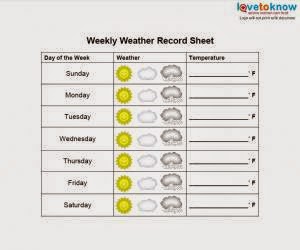
Keeping on to the next corner of the room I would have a weather center. Weather centers are a lot of fun! I would have items in this area that would teach students about the weather, and a place where students could track the weather every day for a week and compare the weather for each day of the week. 

I found this neat weekly weather sheet that can be placed in the weather center to help keep up with the weekly weather:


As we move along the wall, we begin to get to our more quiet centers. The quiet centers have been placed across the room from the noisier centers to keep the noise down for concentration.

Next to the weather center I would have a writing center. This center is where students can practice their writing and/or drawing skills. They can use this center to make up stories about anything they want to! Writing templates would be made available as well as lots of writing utensils such as pencils, markers, and crayons. I would even have some metal cookie sheets available for students to use letter magnets to spell out words. 

The next station would be the computer center. Here students would use the computers to take their Accelerated Reading tests and play kid-friendly games. headphones would be made available for the students so that the noise from the computers would not disturb other students. Ideally there would be enough computers for each student to have their own, but in this case I have made room for two. Most of the classrooms I have observed in have two computers for students use. I found this center at http://www.slideshare.net . It has three computers, but I would only have two because three looks too crowded for the area :)


In the next corner of my room you would find the reading corner. I would have three bookshelves to block off this area and two or three throw pillows for the students to lounge on while they read. The pillow would be made from easy to clean material so that they could be wiped down and disinfected with a Lysol wipe. 


Following the wall around you would find a bulletin board on the wall next to a dry erase board. While a Smart Board can be used for so many things, sometimes it's nice to have an old standby dry erase board for the simpler things. The dry erase board would be used for things that you wanted to leave up all the time and you wouldn't have to worry about it turning off to conserve energy. It is also great for allowing students to draw on and just for daily notes, etc. 

Next to the dry erase board there would be a storage unit for storing class and teacher supplies. This is where boxed sets would be kept, as well as any other supplies that needed to be stored.

In the last corner of the room you would find the teacher's area. This is where my desk or table would be. Students would not be allowed in this area, This is where I would keep all my important papers and my computer for school use. This brings us back to the entry way.

In the center of the classroom is where you would find the students tables. With this age group, I think tables work better than individual desks. I have the tables arranged so that students can see the Smart Board on one side of the room as well as the dry erase board on the other side of the room. I have the tables spaced to allow students free movement in and around them.  

I found this table at schooloutfitters.com


This would be the ideal size for the students, and you can get these types of tables in different colors. Having different colors allows the teacher to call students by groups. If the teacher calls for the green table, then the students at the green table know she is speaking to them.

In between the students tables and the smart board I would have the carpet area. This is the area where the students would gather together for story time and group discussion. I found this carpet at sensoryedge.com


This carpet is perfect for seating students based on the alphabet, an animal, or the number squares. It would be very easy for students to remember where they are supposed to sit, plus they get the benefit of the alphabet.

On bulletin boards around the classroom I would change posters throughout the year to keep up encouragement for students.

Well, this is what my ideal classroom would be like, except as I said earlier, a window or two and a restroom would be great additions to my plan.


What Are You Inferring?

Tuesday, February 17, 2015

Author:  Crissie Linville

Topic:  Inference
Grade Level:  Kindergarten

Common Core Standard (s):  CCSS,ELA-LITERACY.RL.K.1, CCSS.ELA-LITERACY.RL.K.2, CCSS.ELA-LITERACY.RL.K.3, CCSS.ELA-LITERACY.RL.K.9, CCSS.ELA-LITERACY.RL.K.10, CCSS.ELA-LITERACY.RI.K.1, CCSS.ELA-LITERACY.RI.K.2, CCSS.ELA-LITERACY.RI.K.10, CCSS.ELA-LITERACY.SL.K.1.A, CCSS.ELA.LITERACY.SL.K.1.B, CCSS.ELA-LITERACY.SL.K.2, CCSS.ELA-LITERACY.SL.K.5, CCSS.ELA-LITERACY.L.K.2, CCSS.ELA-LITERACY.L.K.2.D.

Lesson Objective:  Students will understand what inference is and will be able to discuss inference in large and small group discussions. Students will make inferences of their own based on a video that will be watched, a story that will be read, and by individual observation.

Lesson Materials:  YouTube video of "Are You My Mother", storybooks of "Are You My Mother", pencils, writing journals, SmartBoard, 4 or 5 bags with identical items in them (ie: tissue paper, a box of raisins, empty cold medicine box), and childrens' tops. 

Instructional Lesson Methods and Assessment 


Anticipatory Set:  
  • The lesson will start by reviewing differences in animals. Teacher will guide discussion on how animals are different by color, size, hair, number of legs, etc.
  • The teacher will explain to the students the definition of infer, inferring, and inference. The teacher will guide student discussion on giving examples of inference. 
  • The teacher will explain to the students that they will be watching a video titled, "Are You My Mother", in which a baby bird is trying to find it's mother. 
  • The teacher will explain to the students that they need to pay attention to the video because there will be discussion after. 
  • The teacher will remind students of the sitting and listening rules while watching a video.
  • The teacher will then play the YouTube video via the Smart Board. 
  • Students with disabilities may be given a copy of the book to help them during the playing of the video.


Recognition “What”
Multiple means of Representation
Strategic “How”
Multiple means of Action and Expression
Affective “Why”
Multiple means of Engagement
 1.1 Customize the display of information. - The teacher will ensure that the video is adjusted to the proper size for all students to be able to view it clearly and will adjust the volume so all students will be able to hear it clearly.
1.2 Provide alternatives for auditory. - Students with auditory issues will be given a book to read along with the video.
1.3 Each Student will receive a copy of the book, “Are You My Mother.” 
 6.2 Support planning and strategy development. - While discussing differences in animals I will ask how the animals are different.
 7.3 Reduce threats and distractions. - The teacher will go over the classroom rules for sitting, watching, and listening to a video. Students who have a difficult time sitting may be allowed to sit or stand behind the other students not be a distraction with their movement.
 3.1 Provide or activate background knowledge. – The teacher and the students will discuss differences in animals, such as coverings, legs, and mouths.
3.2 Highlight critical features, big ideas, and relationships. – Discuss the relationships of the bird to the different animals and objects in the book.
 3.3 Guide information processing. – Group discussion about the inferences in the story.
3.4 Support memory and transfer. – Students will do independent inferences about another student and we will have class discussion about them.  

9.1 Guide personal goal setting and expectations. - Students will be told that there will be a class discussion after the video so that they will know they will be expected to remember details of the video.


Introduce and Model New Knowledge:
  • The teacher will give each student a copy of the book and they will read the story together.
  • The teacher will ask the students to describe the baby bird in the story. The description will be written on the dry erase board.
  • While reading the book, the teacher will stop the reading each time the baby bird asks a new animal if it is its mother. The teacher will ask the students to describe the animal and will write the description of the animal on the board.
  • The teacher will ask the students, based on the description of the baby bird and the animal if they could make an inference as to whether or not this animal is the baby bird's mother. 
Recognition “What”
Multiple means of Representation
Strategic “How”
Multiple means of Action and Expression
Affective “Why”
Multiple means of Engagement
 2.1 Define vocabulary and symbols. - The word infer will be defined and discussed.


 6.4 Enhance capacity for monitoring progress. – The teacher will gauge student understanding by reading the story to them and asking questions along the way and letting them state reasons for inference.
 7.2 Enhance relevance, value, and authenticity. – Students and teacher will discuss why they infer what they infer about the different animals not being the baby bird’s mother.


Guided Practice:
  • The teacher will introduce a bag with a few different items in it. She will then group the students by 4's or 5's, depending on the number of students in the class. 
  • Each group of students will be given a bag with identical contents in it for a game of "What's in Ms. (Teacher's Name)'s Bag." Each group of students will make inferences about the teacher based on what's in the bag. 
  • The students will write or draw their inferences on paper with a pencil.
  • The teacher will call the students back together.
  • The teacher will ask one group at a time what they inferred about her from the items in the bag.

Recognition “What”
Multiple means of Representation
Strategic “How”
Multiple means of Action and Expression
Affective “Why”
Multiple means of Engagement
 3.3 Guide information processing. - Students will make inferences about me based on the items in the bag.
 4.1 Provide ways to respond. – Groups may choose to write their inferences down or to simply remember what they have inferred and speak it.
 7.1 Increase individual choice and autonomy. – Students will be encouraged to make their own inferences about the items in the bag.
 4.2 Provide varied ways to interact with materials. – Students will be able to hold, read, and look at the items in the bag.


 8.3 Foster collaboration and communication. – Students will be sharing their inferences with each other discussing why they are inferring what they infer. Students can either agree or disagree.


Independent Practice:
  • The teacher will place a writing prompt on the board. Each student will be given their writing journal. The teacher will explain to students that she wants them to make their own inferences about another student based on an item of clothing they are wearing.
  • The teacher will write an example on the board to encourage proper sentence structure. Students will have the option of showing their inference as a drawing.
  • The students will write or draw their inference in their writing journal.
Recognition “What”
Multiple means of Representation
Strategic “How”
Multiple means of Action and Expression
Affective “Why”
Multiple means of Engagement
3.3 Guide information processing. -The teacher will set up the structure for the writing prompt the students will follow.

 4.1 Provide ways to respond. – Students may write or draw their inferences in their journals.
 7.1 Increase individual choice and autonomy. Students will work by themselves on writing or drawing using their own inferences.
 3.4 Support memory and transfer. – Students will use their writing or drawing skills to come up with their own inferences.


 5.2 Provide appropriate tools for composition and problem solving. – The teacher will write a prompt on the board to provide students sentence structure.


5.3 Provide ways to scaffold practice and performance. The teacher will write an example sentence on the board to encourage proper sentence structure.


Wrap Up:
  • Students will turn in their journals as they finish.
  • Students will then be allowed to self assess their inferences by asking the student they made their inference about if they were correct. 
  • The teacher will call the class together and have group discussion about their independent inferences.
Recognition “What”
Multiple means of Representation
Strategic “How”
Multiple means of Action and Expression
Affective “Why”
Multiple means of Engagement
 2.2 Clarify syntax and structure. – The teacher will review students writing journals for evidence of understanding.

 6.3 Facilitate managing information and resources. - Students will have a designated are to place their writing journals when finished
 8.1 Heighten salience of goals and objectives. - The teacher will discuss the importance of making an inference based on items that are seen.


9.3 Develop self-assessment and reflection. - Students will ask the student they made their inference about if they were correct or not.  


Assessment:
  • The teacher will engage students in group discussion, as well as in their small group discussion, to check for understanding.
  • The teacher will review writing journals to check for understanding and will review the writings or drawings with the individual students who may seem to have not understood. 


Recognition “What”
Multiple means of Representation
Strategic “How”
Multiple means of Action and Expression
Affective “Why”
Multiple means of Engagement
 3.1 Provide or activate background knowledge. -The teacher will assess prior knowledge during group and small group discussion.
 6.4 Enhance capacity for monitoring progress. - The teacher will assess students during group discussion for their understanding of inference. The teacher will also review student's writing journals to check for understanding.
 7.2 Enhance relevance, value, and authenticity. - The teacher will discuss with each individual students their responses in their writing journal. 


Please submit the checklist below with your project (hyperlink for your UDL wiki page) and annotate which elements you have incorporated and where:


Brain Network
UDL Principle
Recognition Networks
“What”
recognition network of the brainZoom In
I. Multiple Means of Representation ensures that the Recognition networks of students are supported

    
Specific UDL Accommodations (1.1 – 3.4)

Key Elements
Please Put a Check Mark Next To the Ones You Incorporated


Where in the project?
(Which Lesson Phase 1-6)

X
1
X
1
X
1

X
2
X
5


X
1
X
1
X
1, 3, 4
X
1, 4


Strategic Networks
“How”
strategic network of the brainZoom In


II. Multiple Means of Action and Expression ensures that the Strategic networks of students are supported

   
 Specific UDL Accommodations (4.1 – 6.4)

Key Elements
Please Put a Check Mark Next To the Ones You Incorporated

Where in the project?
(Which Lesson Phase 1-6)

X
3, 4
X
3


X
4
X
4


X
1


X
2


Affective Networks
“Why”
affective networks of the brainZoom In

III. Multiple Means of Engagement ensures that the Affective networks of students are supported

     Specific UDL Accommodations (7.1 – 9.3)

Key Elements
Please Put a Check Mark Next To the Ones You Incorporated

Where in the project?
(Which Lesson Phase 1-6)

X
3, 4
X
2, 6
X
1

X
5


X
3


X
1


X
5